
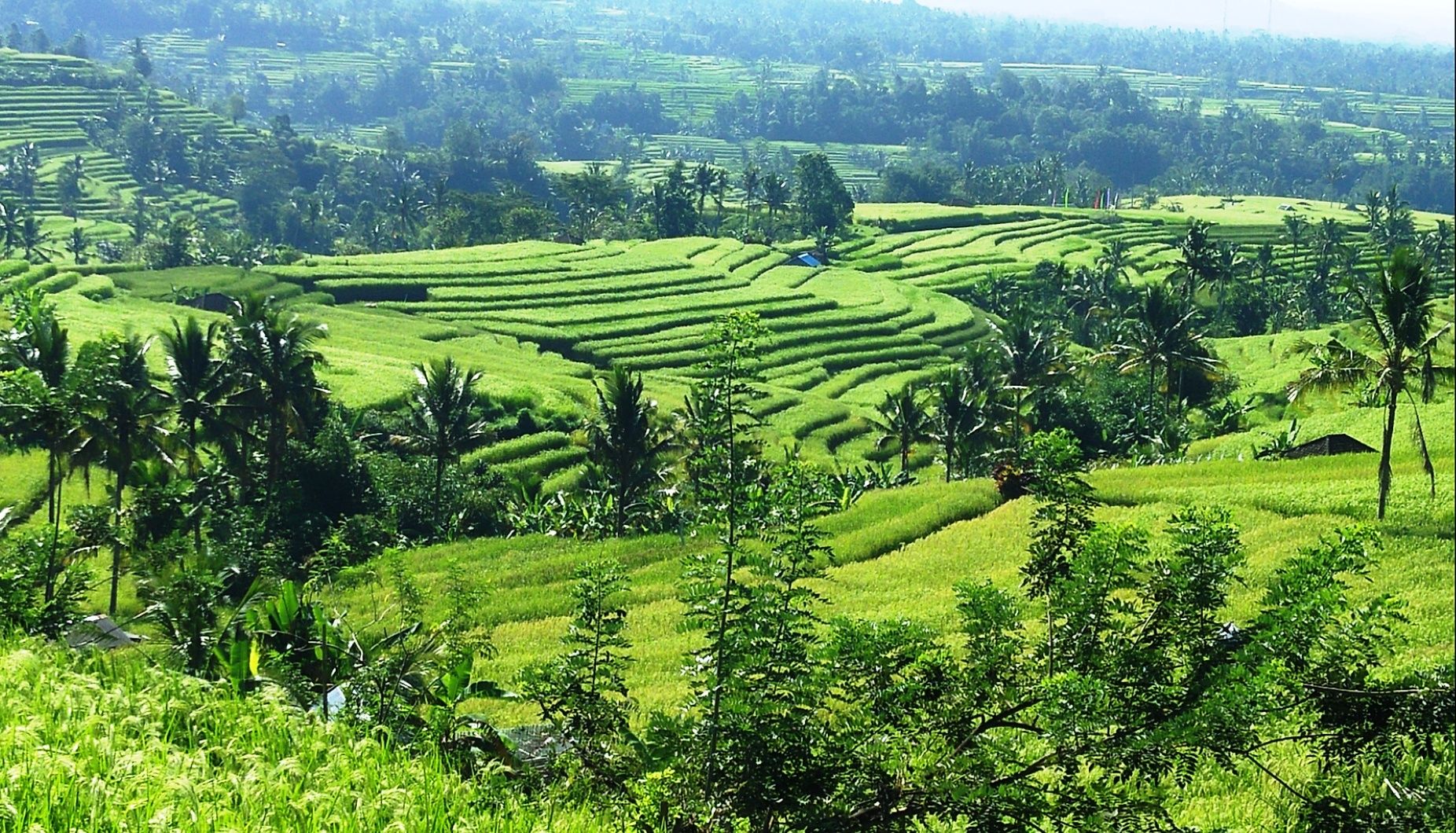
A farming landscape in Tabanan
Jatiluwih is in the Tabanan area of Bali. Indonesia Travel connects its rice terraces with subak and Bali’s cultural landscape, inscribed on UNESCO’s World Heritage List in 2012. A visit can focus on how this agricultural landscape is shaped and maintained, as well as its appearance.
Understanding subak
UNESCO describes subak as a cooperative water-management system involving canals, weirs, and water temples. The recognised cultural landscape reflects Tri Hita Karana, bringing together the spiritual realm, people, and nature. The fields can therefore be understood as part of community life and work, rather than simply a backdrop for photographs.
Allow time to observe the landscape from designated paths. If you would like to understand farming practices in more depth, ask the operator about local guiding options. The details of subak life cannot all be inferred from a view or a single photograph.
Make room for a realistic visit
Discuss a comfortable amount of walking, your pickup point, and your return time with the TUBI team. Follow the operator’s paths and directions, and do not enter cultivated plots without permission. Discuss each participant’s access needs before confirming the route.
The photograph shows Jatiluwih at the time it was taken; a working agricultural landscape may look different during your visit. Check the operator’s current information about paths, activities, and admission. Leave room to pause without assuming that every viewpoint or activity will always be available.